10, 15, 20 or 30 Yard: Which Do You Actually Need?
We run 15 and 20 yard containers. Here is how they compare to the sizes we don't run, and when you should call somebody else.
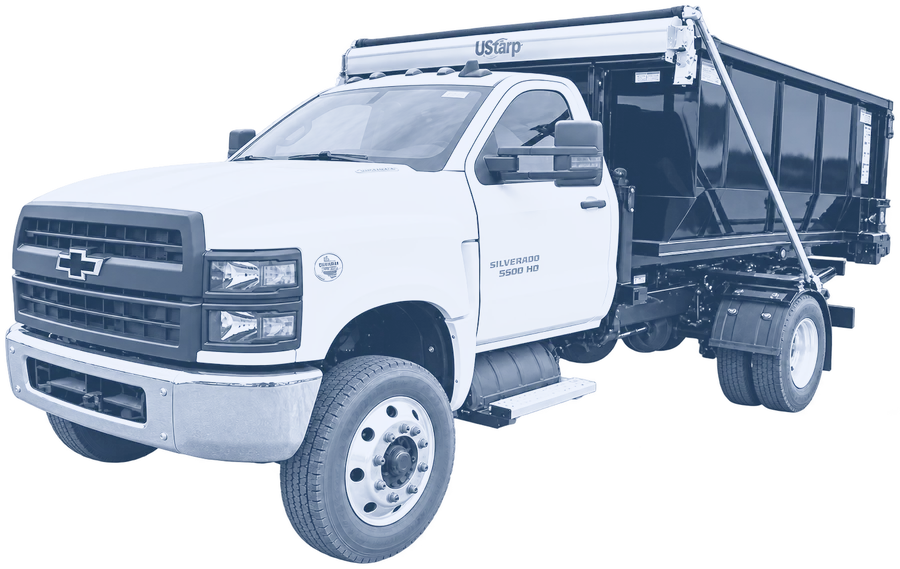
Merit runs a 15-yard and a 20-yard. We don't have a 10, a 30 or a 40, and we'd rather compare honestly than pretend they don't exist.
Roughly: a 10-yard holds about 4 pickup loads, a 15-yard about 6, a 20-yard about 8, a 30-yard about 12 and a 40-yard about 16.
For most residential and light commercial work here, a 15 or 20 is correct. If your job genuinely needs a 30 or 40 — a whole-house gut, structural demolition, a commercial fit-out — call someone else, and we'll tell you so.
Reviewed September 7, 2026. Prices and included scope are checked against our current rate card.
We run two sizes, and that's deliberate
Merit runs a 15-yard and a 20-yard roll-off. We don't have a 10, a 30 or a 40. Rather than pretend the other sizes don't exist, here is an honest comparison so you can work out whether we're the right call.
The short version: for the overwhelming majority of residential and light commercial jobs in this area, a 15 or a 20 is the right container. The 10 is usually too small to be good value, and the 30 is more than most driveways or projects need. But there are real cases where a 30 or 40 is genuinely correct, and if yours is one of them we'd rather tell you than take the booking.
What each size actually holds
| Size | Roughly | Typical footprint | Best for |
|---|---|---|---|
| 10 yard | ~3–4 pickup loads | Similar length, lower walls | Small bathroom gut, single-room clear-out, small dense loads |
| 15 yard (ours) | ~6 pickup loads | 12' × 8' × 4.2' | Garage clear-out, one or two rooms, small roof, standard rental turnover |
| 20 yard (ours) | ~8 pickup loads | 12' × 8' × 5.6' | Whole-house cleanout, kitchen remodel, most roof tear-offs, basement finish |
| 30 yard | ~12 pickup loads | Longer and taller | Large-scale demolition, whole-house renovation, commercial fit-outs |
| 40 yard | ~16 pickup loads | Longest available | Major construction and commercial volume |
Two things worth pulling out of that table.
Our 15 and 20 share the same footprint. Both are approximately 12 feet by 8 feet. Only the wall height differs. So choosing the 20-yard costs you exactly nothing in driveway space — which is why the 20 is the right default for anyone genuinely uncertain, at $30 more.
Bigger containers are not proportionally more expensive. Most of the cost in any roll-off rental is the truck, the fuel, the driver and the disposal, not the steel. That's a real argument, and it's the reason our 20-yard is only $30 above the 15.
And why it usually isn't the bargain it looks like
A 10-yard is right for two situations. One is a small job with dense material, like a bathroom tear-out with tile and mortar, or a small concrete patch. On those you hit the weight limit long before you fill the box. The other is a very small clear-out where you are certain about the volume.
Outside those, the 10 is usually a false economy. The price gap between a 10 and a 15 in this market is typically small, and the volume gap is not. The most expensive outcome is ordering a second container because the first was too small. That happens to people who ordered a 10 far more often than to people who ordered a 20.
If you've priced a 10-yard elsewhere and it's close to our 15, our honest advice is to take the extra room.
Still deciding between sizes?
Get my priceCases where we'll tell you to call someone else
Some jobs really do need more than 20 yards, and there is no version of this page where we pretend otherwise:
- Whole-house gut renovations down to the studs
- Structure demolition beyond a shed or small outbuilding
- Commercial fit-outs and tenant improvement work at scale
- Large-volume bulky material — furniture from a full commercial clear-out
- Any job where you've already worked out you need 12+ pickup loads
Two 20-yard containers hold more than one 30, but they also mean two deliveries and two hauls. Depending on your timeline that's either fine or it isn't. Tell us the job and we'll say honestly which way it falls.
Worth noting: volume isn't always the binding constraint. Every rental includes 2 tons, and dense material can max that out in a container that looks half empty. Before you size up on volume, read what 2 tons actually looks like.
A method that beats guessing
Count it in pickup loads. A standard pickup bed is roughly 2 to 2.5 cubic yards. Walk the job and estimate how many trips it would take. Six or fewer means the 15. Six to eight means the 20. More than that, call us.
Then add a margin. Almost everyone underestimates. Once a container is on site, things go in it that weren't on the original list. That shed corner, those old paint-free doors, the stuff behind the workbench.
Check the density separately. If a meaningful part of the load is roofing, concrete, dirt, tile or plaster, weight decides the answer, not volume.
The size guide walks through our two containers in more detail, and the quiz on the homepage will make a recommendation from a few questions.
Before You Book
Call or text (719) 203-2529 if you want a straight answer on your specific job.
Do you rent 10, 30 or 40 yard dumpsters?
No. Merit runs a 15-yard and a 20-yard roll-off. For most residential and light commercial work in Colorado Springs and Teller County those are the right sizes. If your job genuinely needs a 30 or 40, tell us and we'll say so rather than take the booking.
Is the 20 yard worth the extra $30 over the 15?
Usually, yes. Both containers have the same approximately 12-foot by 8-foot footprint, so the 20-yard takes up no more driveway space — only the wall height differs. If you are genuinely uncertain about volume, the extra $30 is much cheaper than a second container.
How many pickup loads fit in a 20 yard dumpster?
Roughly eight, using a standard pickup bed at about 2 to 2.5 cubic yards. The 15-yard is roughly six. Both figures assume material that loads reasonably efficiently and sits below the top rail.
What if I underestimate and need more room?
Contact us before your scheduled pickup. Additional arrangements depend on availability. Ordering one size up at the start is almost always cheaper than a second container afterwards, which is why we suggest the 20-yard whenever the estimate is close.
Not sure which size fits your job?
Describe what you're clearing and we'll tell you honestly which container works — including when neither of ours is the right answer.
- No address or payment details
- Most replies within a few hours
- Three fields, about twenty seconds
Faster: call (719) 203-2529 or send a text— or book online if you already know the size and dates.